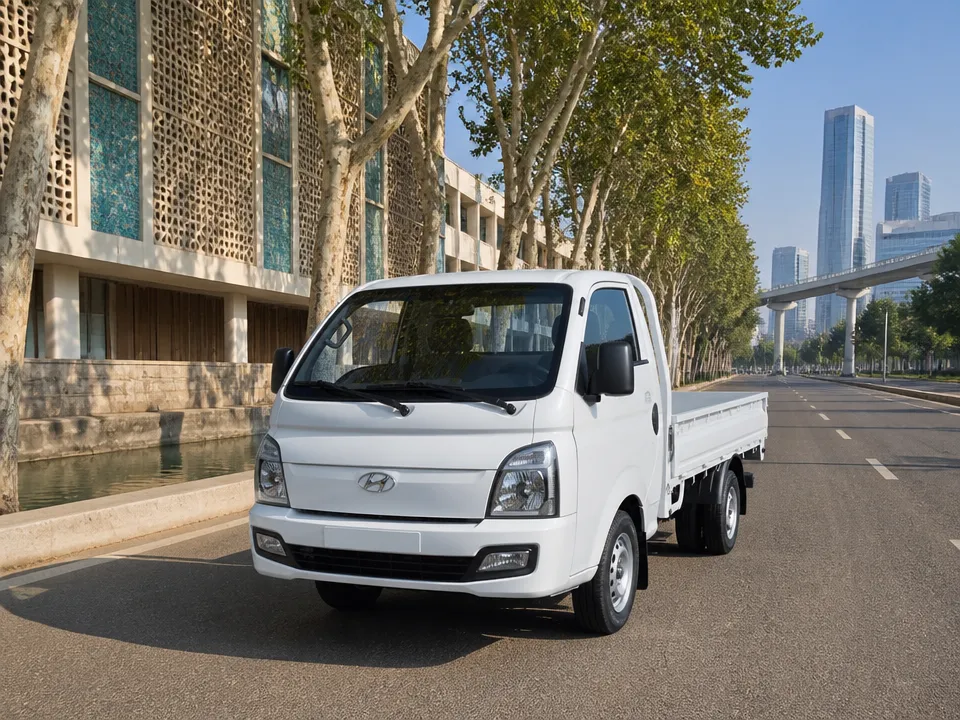
Hyundai Porter
★4.5· 63Manual2.5 L133 hpRear3 seats
600,000 UZSper day
Book now















Need a truck for a day or a week? Rent-Trip has 4 commercial vehicle models: from the compact Labo to the powerful Isuzu NQR. We work under a contract, with a deposit and insurance.
Owning a commercial vehicle privately means costs for parking, maintenance, and depreciation that don't pay off with infrequent use. Renting solves the problem precisely: you pay only for the days the vehicle actually works. Below are typical scenarios where renting a truck in Tashkent turns out to be faster and cheaper than buying your own.
Truck rental for a day in Tashkent is a standard format: you get the car in the morning, return it in the evening, and pay for one day. For moving a one-bedroom apartment, a Chevrolet Labo is enough; for a three-bedroom with furniture, a Hyundai Porter or Kia Bongo. Loading and unloading are your responsibility, but a car with high sides and an open body allows loading large items without dismantling doorways. On Tashkent's flat terrain, a manual transmission is not a hassle even for drivers with little experience. Plan your move on a weekday — on weekends, trucks are booked faster, especially at the end of the month.
For construction materials — cement, bricks, sand — you need a truck with a high side and a reserve of load capacity, such as the Isuzu NQR. This model takes pallets of bricks and bags weighing 50 kg without the risk of overloading. For dacha tasks — hauling soil, bringing boards or crushed stone — the Kia Bongo is sufficient, which has a lower side and is easier to load manually. On the flat terrain of Tashkent, a truck with a manual transmission handles a full load without engine overheating — there are no passes or long climbs in the city. If construction lasts several weeks, calculate the rental for a long term: the daily rate is revised in this case.
For daily delivery of goods around Tashkent — from Chorsu Bazaar to shops in new districts — light trucks like the Chevrolet Labo are suitable. The compact wheelbase allows parking in courtyards and narrow streets of the old city, where a long body won't turn around. The Labo is more maneuverable at traffic lights and in dense traffic — for routes with frequent stops, this is more important than cargo volume. If you transport goods regularly, consider monthly rental — it's more profitable than ordering a car with a driver each time.
Rent-Trip's fleet includes 4 cargo vehicle models. All have manual transmission, all are commercial class. They differ in body size, payload capacity, and price. Below is a table with prices and parameters.
The minimum rental price for a cargo vehicle in Tashkent is from 350,000 UZS/day for a Chevrolet Labo; the most expensive model is the Isuzu NQR from 1,500,000 UZS/day. The price difference between Labo and NQR is more than 4 times, so choose a car strictly according to the cargo volume, not "with a reserve".
| Model | Class | Transmission | Price |
|---|---|---|---|
| Chevrolet Labo | Commercial, truck | Manual | from 350,000 UZS/day |
| Hyundai Porter | Commercial, truck | Manual | from 600,000 UZS/day |
| Kia Bongo | Commercial, truck | Manual | from 600,000 UZS/day |
| Isuzu NQR | Commercial, truck | Manual | from 1,500,000 UZS/day |
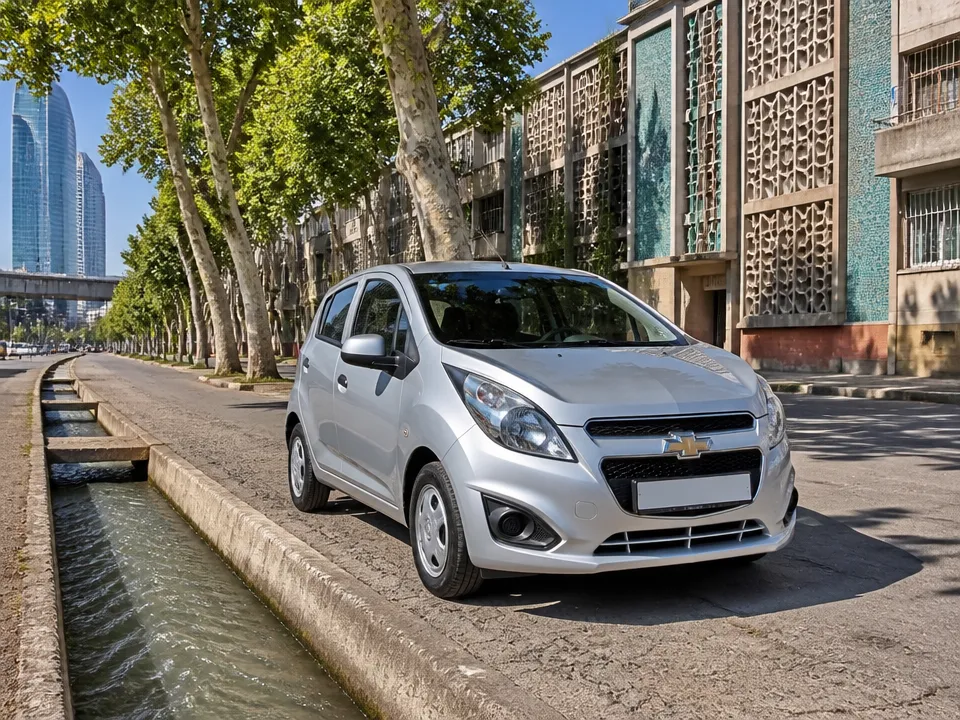
Chevrolet Labo — the most affordable truck in the Rent-Trip lineup: from 350,000 UZS/day, and it's enough for moving one or two rooms. The car is compact with a short wheelbase, so it easily enters courtyards and maneuvers on the narrow streets of old Tashkent. For transporting boxes, household appliances, and disassembled furniture, it's the optimal choice. On the highway to Chimgan or Charvak, the Labo also holds speed confidently, although for heavy construction materials, it's better to take a higher-class model. Before handing over, we check the oil level, brake system, and tire pressure — the car goes out fully operational.
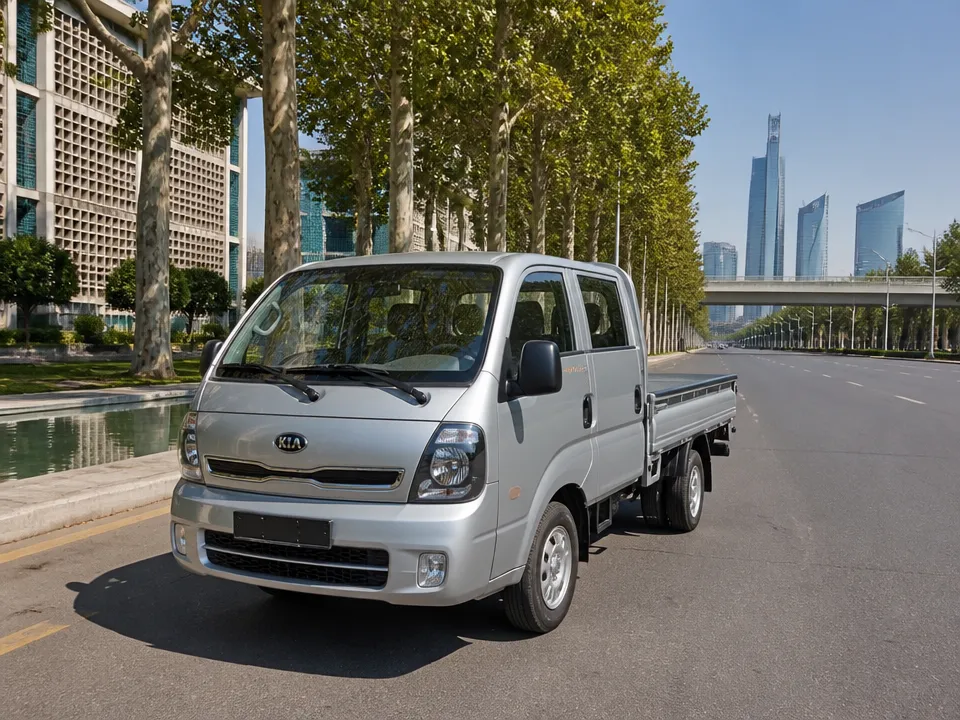
Hyundai Porter and Kia Bongo are trucks that are identical in price (from 600,000 UZS/day) and similar in characteristics, confidently carrying furniture and building materials. Both models have a spacious body with drop sides, which simplifies loading large items — wardrobes, sofas, refrigerators. The difference between them is in the details: the Porter has a slightly lower side, while the Bongo has a wider body. In practice, both vehicles can handle transporting building materials for renovating a two-room apartment in one trip. The Porter and Bongo have similar body geometry, but different generations have different side heights — check when booking if you are carrying bulk materials.
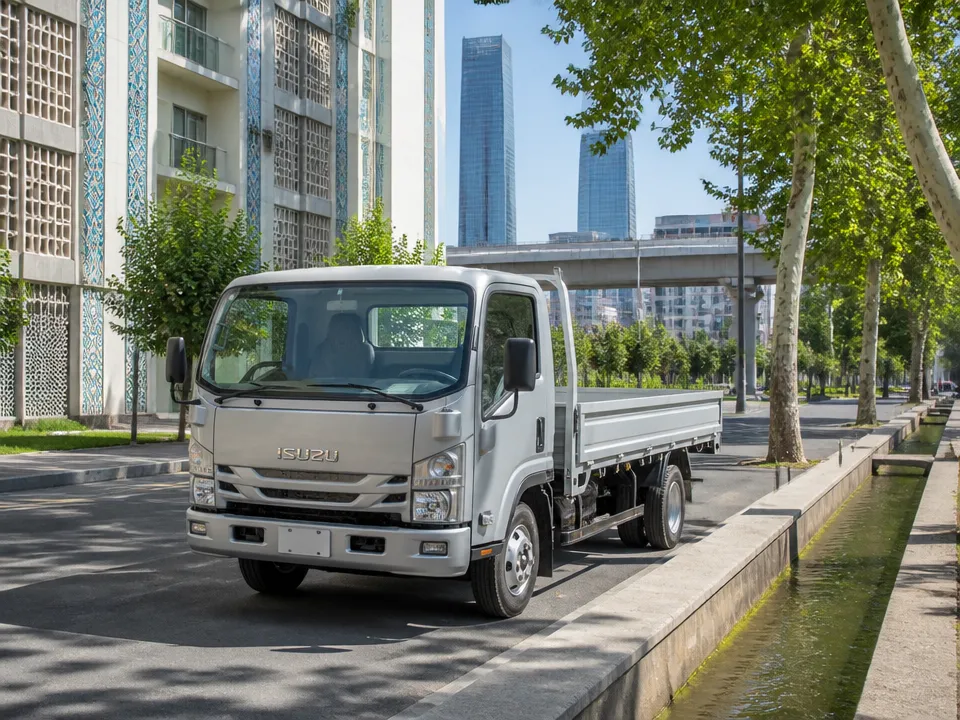
Isuzu NQR — the most powerful model in the Rent-Trip selection, from 1,500,000 UZS/day, for building materials, pallets of bricks, and large equipment. This vehicle takes on loads that light trucks cannot handle: pallets of paving slabs, bags of cement, construction scaffolding. The NQR also feels confident on intercity routes — you can drive to Samarkand or Bukhara with a full load without worrying about the engine or suspension. It makes sense to use the NQR for loads of one ton or more — for small deliveries, its price won't pay off.
The main question when renting a cargo vehicle is not 'which car is better' but 'which one fits your task.' Here's a simple logic for choosing by cargo type and volume.
For furniture and household items, a Porter or Labo is enough; for construction materials, a Bongo or Isuzu NQR is needed—depending on weight. Furniture is better transported in a car with a tarpaulin or closed body—this reduces dust and the risk of damage on Tashkent roads. Bulk materials—sand, crushed stone, expanded clay—require high sides so that the load does not spill out during movement. If you're transporting goods for a store—light but bulky boxes—choose a model with a wide body and low side for convenient loading. When ordering, specify what kind of body a particular car has: tarpaulin, box, or open platform.
If you are torn between two models — take the larger one: an underloaded car works without overload and is safer on the road. The weight of the load can be estimated in advance: a cubic meter of dry earth is about 1.5 tons, a cubic meter of sand is 1.6 tons, a pallet of bricks is about 1 ton. For a house move, calculate by the volume of belongings, not by the number of rooms — furniture can be bulky.
All terms are fixed in the contract before handing over the keys, so there are no surprises when returning the car. We explain how this works at Rent-Trip.
The deposit depends on the car class: from 3,000,000 UZS for economy and comfort to 8,000,000 UZS for premium and unique models. It is returned within 1-3 business days after returning the car without damage or fines. The deposit is blocked on a card or paid in cash — whichever is more convenient for you. Upon return, we inspect the car together with you, record the condition in an act, and the deposit is unfrozen. If fines from cameras came in during the rental period, they are deducted from the deposit, and the remainder is returned.
The rate includes mileage up to 200 km per day; excess over the limit is paid per kilometer, the amount is specified in the contract. For trips around Tashkent, 200 km is with a margin: from the airport to Tashkent City and back is about 30 km. If you plan a suburban trip to Chimgan or Charvak, 200 km is enough for the road there and back without considering local travel. The car is provided with a full tank, and it must be returned with a full tank. Gas stations in Tashkent are at every major intersection, so there are no fuel problems.
Rental is formalized by a contract that specifies the model, term, tariff, mileage limit, and liability of the parties. Car insurance and civil liability are included in the cost — you don't pay for this separately. The contract specifies the conditions for returning the deposit and the procedure in case of an accident. Before signing, the Rent-Trip manager shows the car, records the condition of the body and interior, and explains how the controls work. If anything in the contract seems unclear — ask right away, we answer all questions before signing.
To rent a cargo vehicle, you need a standard set of documents, and it does not differ from renting a passenger car. Check in advance so as not to waste time when receiving.
If a second driver gets behind the wheel, his data is also entered into the contract. Rental without a driver's license is impossible: a truck is a source of increased danger, and we are responsible for safety on the roads of Tashkent. For legal entities, a representative's passport and company details are needed — the contract is drawn up for the organization.
Minimum driver age is 23 years, experience — from 2 years. For Isuzu NQR requirements are stricter: age from 25 years and experience from 3 years. We check documents against the Uzbekistan traffic police database for license revocation and active fines. If the driver has restrictions — rental is not processed, and it is better to find out about this before coming to the office. All drivers included in the contract must be personally present when receiving the car — a power of attorney does not replace presence.
The 'day' format in truck rental has its own rules, and it's worth understanding them before booking. We'll also look at how the car behaves outside the city and what to do in an emergency.
A rental day is 24 hours from the moment of receiving the car, not a calendar day. If you picked up the car at 10:00 AM on Tuesday, you must return it by 10:00 AM on Wednesday. Late return is charged as additional hours or a full day — this is specified in the contract. We recommend allowing 1-2 hours extra for return: traffic jams in Tashkent can be unpredictable, especially during rush hour on Amir Temur Avenue. If you realize you won't make it, call us — we'll extend the rental without penalties.
Rent-Trip trucks can be taken for out-of-town trips — to Chimgan and the Charvak reservoir is about 80 km on a good road. Any of the four models is suitable for such routes, but note: on the Chimgan serpentine, manual transmission requires experience. If you're going to Charvak for a picnic, Labo is enough — it's more compact and economical. For delivering building materials to a dacha in the suburbs of Tashkent, take Bongo or Porter. Intercity routes — Samarkand, Bukhara, Fergana — are available on all models; the 200 km/day mileage limit can be extended by paying extra for additional kilometers.
In case of an accident or breakdown, first call Rent-Trip — support works 24/7. We will advise on what to do, call a tow truck if necessary, and arrange a car replacement if the breakdown is serious. Fines from cameras come to the car owner — we forward them to you and deduct the amount from the deposit if you have not paid them yourself. For minor scratches and chips incurred during operation, the deposit is not withheld — we understand that the truck works, not sits in a garage.
Truck rental in Tashkent is a solution for a specific task: moving, construction, goods delivery. Four models — from the compact Chevrolet Labo to the powerful Isuzu NQR — cover almost all scenarios, from transporting a couple of boxes to delivering pallets of bricks. The choice comes down to three parameters: cargo volume, weight, and route distance. For light city deliveries, the most affordable model is enough; for construction materials and large furniture, the middle one; for heavy commercial cargo, the most powerful. The rate includes up to 200 km of mileage per day, insurance, and 24/7 support; the deposit is returned within 1-3 business days. Plan your rental in advance, especially for weekends and end of month, and clarify contract details before signing — then the truck will solve the task without extra costs.
To rent a cargo vehicle in Tashkent, you will need a passport and a driver's license of category B or C (depending on the model). We conclude a contract, you pay a deposit — and the car is yours.
The deposit depends on the car class: from 3,000,000 UZS for economy and comfort to 8,000,000 UZS for premium and unique models. It is returned within 1–3 business days after returning the car without damage or fines.
Minimum price — from 350,000 UZS/day for Chevrolet Labo. Hyundai Porter and Kia Bongo — from 600,000 UZS, Isuzu NQR — from 1,500,000 UZS. The rate includes mileage up to 200 km.
Yes, we can deliver the car to the desired location in Tashkent. Terms and delivery cost are discussed when booking via Telegram. Delivery usually takes from 30 minutes.
Rent-Trip trucks are suitable for moving, transporting construction materials, commercial deliveries around the city, and intercity trips. Choose a model based on the volume and weight of the cargo.