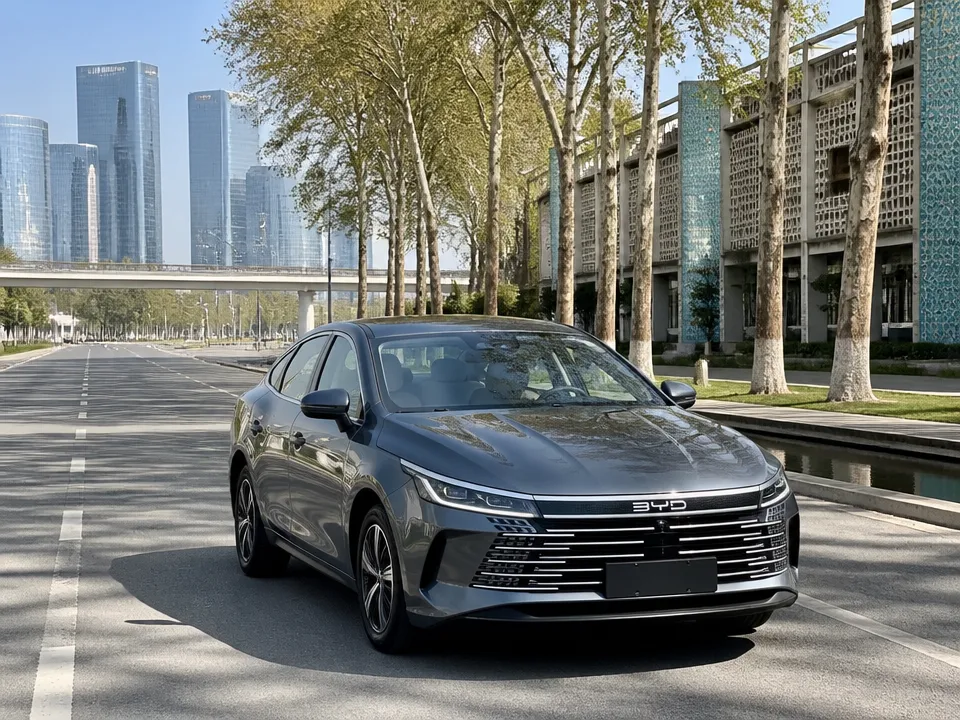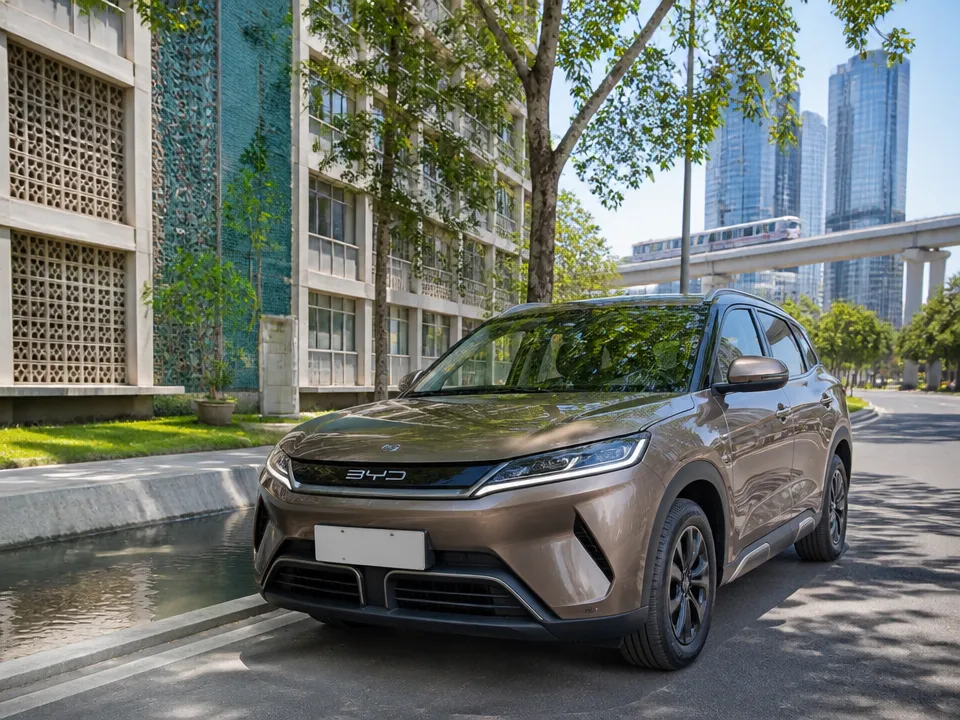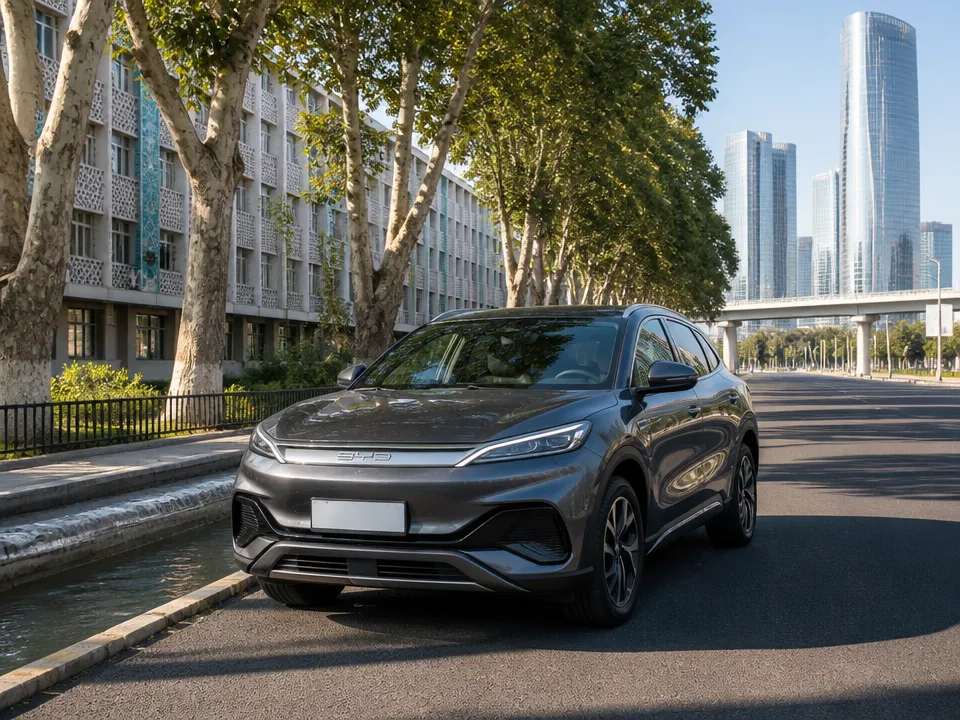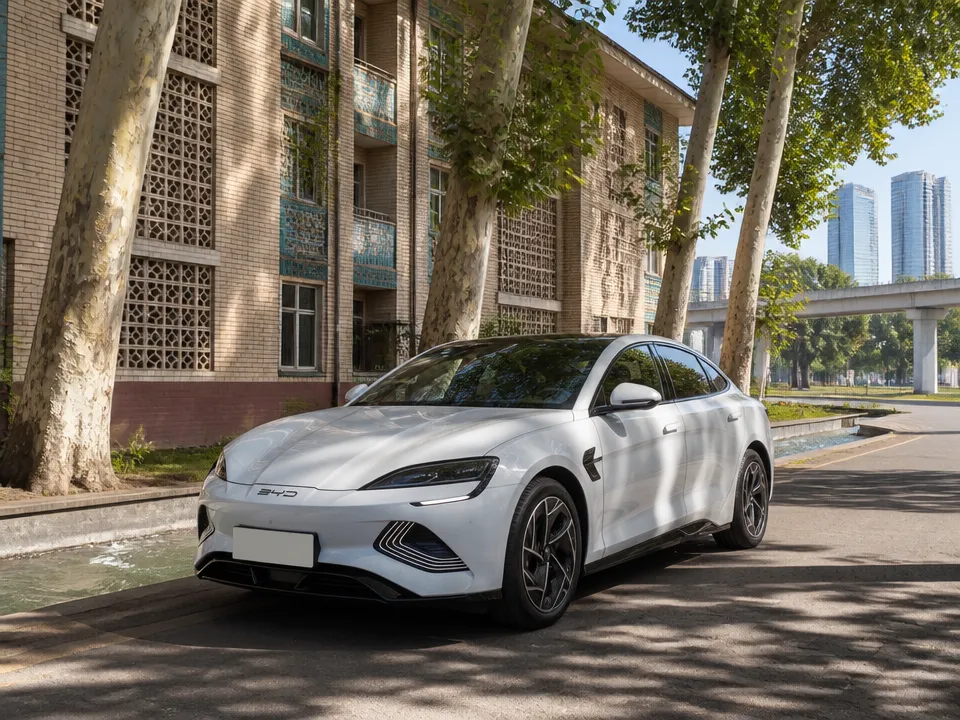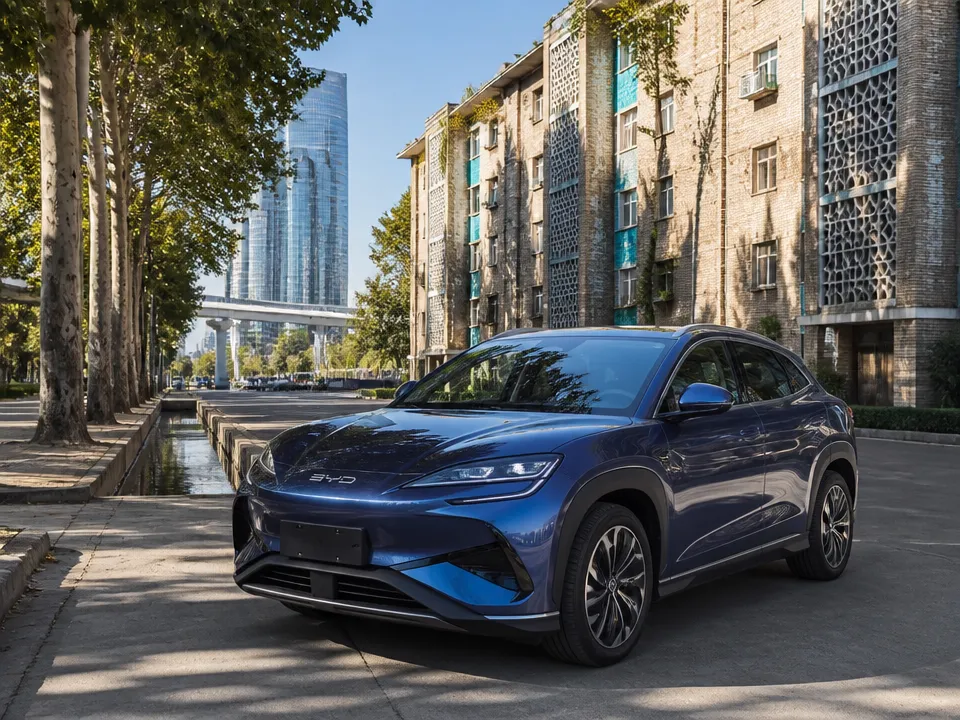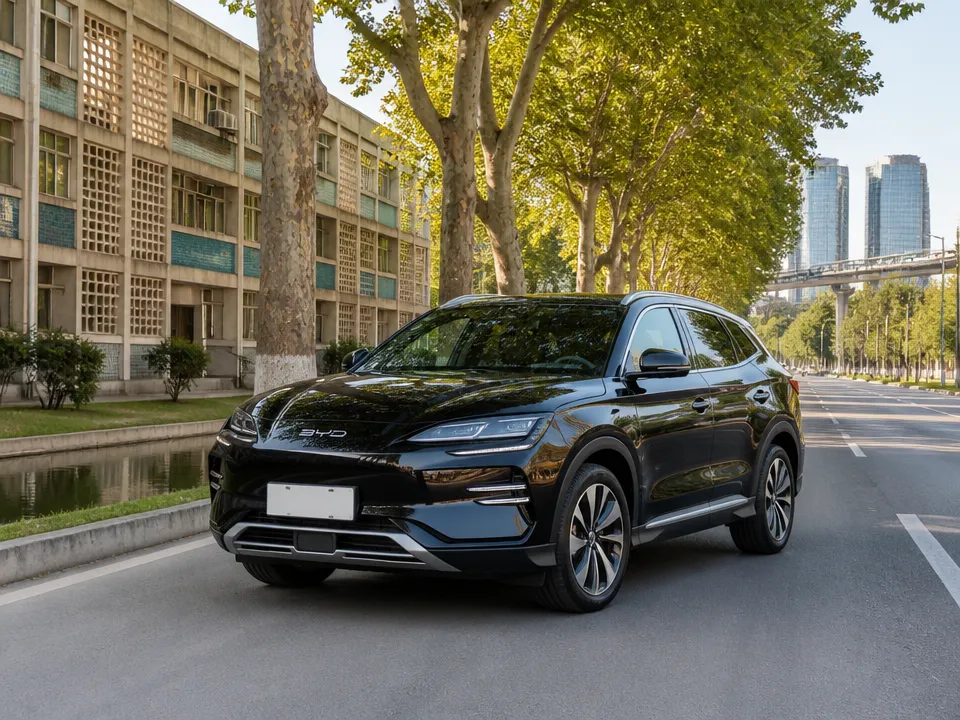
BYD Song Plus 2024
★4.9· 63 ratingsAutomatic1.5 L197 hpFront-wheel5 seats
1 200 000UZS per day
Book now












Rented a BYD Yuan Up for a day, needed to run errands. The car is comfortable and economical, really liked it. Otabek helped with the choice, everything went smoothly. Cost 800,000 UZS, quite reasonable for such a car.
Verified reviewI rented a BYD Yuan Up for a couple of days, really liked it! The car is comfortable, the interior is clean and tidy. Konstantin helped with processing quickly, no problems arose. Went to Chimgan, everything went great, paid 800,000 UZS.
Verified reviewI rented a BYD Song Plus for the weekend, really liked it! The car is comfortable, great for a trip to Chimgan. Service is top-notch, everything was processed clearly and quickly. Igor helped with the choice and advised on the route. The price of 1,200,000 UZS is quite reasonable.
Verified review Sardor UmarovCar selection specialist
The Rent-Trip fleet has 8 BYD models: from a hatchback for 350,000 to a business sedan for 1,600,000 UZS/day. Electric vehicles and hybrids are suitable for the city, suburban trips, and VIP meetings.
Tashkent is a flat city with hot summers and mild winters, where an electric car covers most travel scenarios. We analyze why the BYD brand is not an experiment, but a pragmatic choice for rental.
In Tashkent, an electric car covers 90% of scenarios: the city is flat, traffic jams are at rush hour, and climate control runs on battery without fuel consumption. In hot summer, when the thermometer rises above 40°C, the air conditioner in a BYD runs on battery, and the range decreases slightly—unlike gasoline cars, where the engine spends power on the compressor. Regenerative braking in traffic jams returns up to 15-20% of charge—in dense traffic on Amir Temur Avenue, this noticeably extends the range. The elevated circular metro line and wide avenues allow you to quickly bypass congestion, and the flat terrain without passes and serpentines makes the electric car predictable to drive. Plane trees and aryks along the streets provide shade but do not affect the road surface—asphalt in Tashkent is smooth, which saves the suspension and tires. The open horizon and absence of mountains around the city ensure stable operation of regenerative systems on any route.
The BYD LFP battery (Blade Battery) is rated for 5000+ charge cycles — that's 10+ years of operation, so in rental it maintains the stated range even after intensive use. At Rent-Trip, we check battery condition before each rental: the degradation level is recorded in the report so you don't pay for someone else's wear. LFP chemistry is not afraid of frequent fast charges up to 100% — unlike NMC batteries, which are recommended to keep at 20-80%. This means you can charge your BYD at any station in Tashkent without worrying about "harm" to the battery. The Blade Battery is also resistant to overheating — an important plus for hot climates where summer temperatures inside a parked car reach 60°C. The battery thermal management system maintains optimal temperature, extending lifespan and preserving capacity.
Charging a BYD costs 3-5 times less than gasoline for the same distance: a full charge of the e2 is about 15,000-20,000 UZS versus 80,000-100,000 UZS for fuel for a similarly sized car. When renting, you pay a fixed daily rate, and the savings on energy are your bonus: the more you drive, the more noticeable the difference. If you plan a city route of 100-150 km per day, the difference in energy costs is 60,000-80,000 UZS in favor of the electric car. Fast DC charging at stations like those installed near shopping centers restores 80% of capacity in 40-60 minutes — enough to continue your trip. For comparison, a comfort-class gasoline sedan on the same distance will require 8-10 liters of fuel, which at current gas station prices in Tashkent will noticeably hit your budget.
Rent-Trip's fleet includes 8 BYD models: from a budget hatchback to a business sedan. Below is the full list with prices, classes, and body types so you can immediately see what fits your budget.
At Rent-Trip, there are 8 BYD models — from 350,000 to 1,600,000 UZS/day, all with automatic transmission. The price difference between classes reflects not only size but also range, trim level, and equipment — choose according to your trip scenario.
| Model | Class | Body | Price from |
|---|---|---|---|
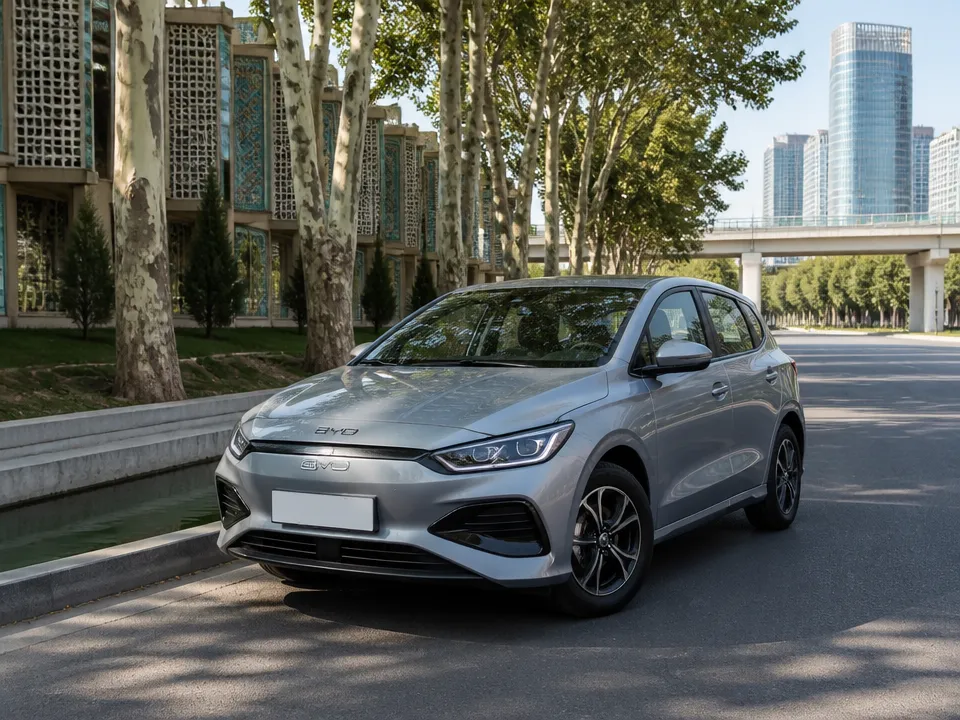
| BYD e2 | Economy | Hatchback | 350,000 UZS/day |
| BYD Chazor | Comfort | Sedan | 700,000 UZS/day |
| BYD Yuan Up | SUVs | Crossover | 800,000 UZS/day |
| BYD Atto 3 | SUVs | Crossover | 900,000 UZS/day |
| BYD Song Plus | SUVs | Crossover | 1,200,000 UZS/day |
| BYD Seal | Comfort | Sedan | 1,200,000 UZS/day |
| BYD Sealion 7 | SUVs | Crossover | 1,200,000 UZS/day |
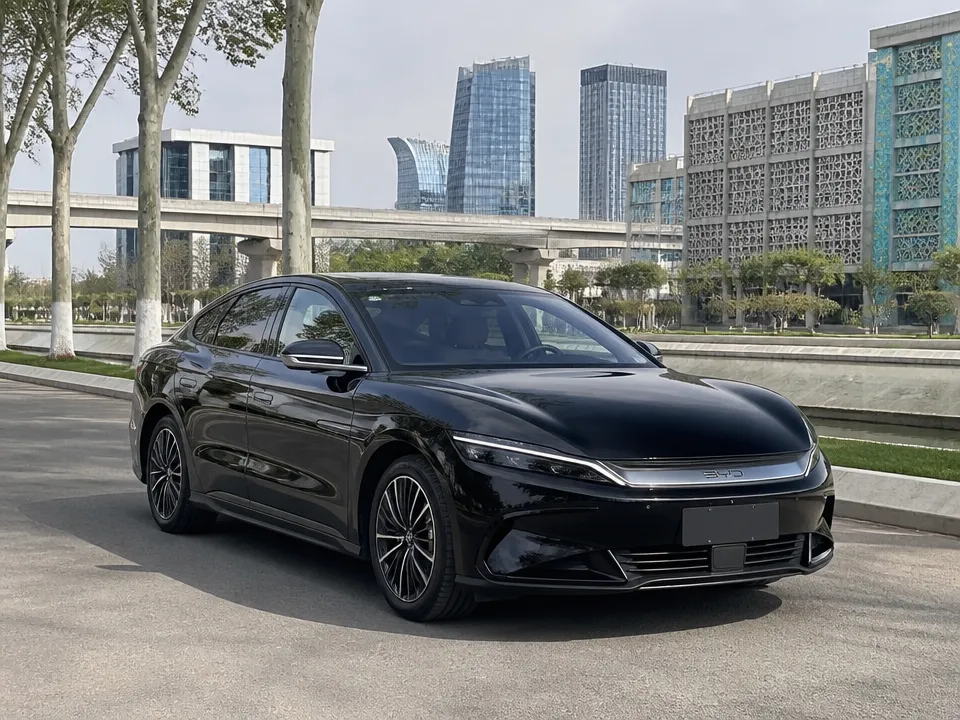
| BYD Han | Business | Sedan | 1,600,000 UZS/day |
BYD e2 — the most affordable electric car in our fleet: from 350,000 UZS/day, a hatchback with automatic transmission for the city. Compact dimensions allow parking in Chorsu courtyards and narrow streets of the old city, where large sedans feel insecure. The e2's range is enough for a full day of trips around Tashkent: from the airport to Tashkent City and back with a stop at the bazaar — without recharging. Energy consumption in the urban cycle is minimal, and recuperation in traffic jams returns part of the charge. For one or two people who need a maneuverable and economical car for a couple of days — the e2 solves the task without overpaying. The cabin has enough space for two passengers and a couple of suitcases, and climate control runs on battery without affecting dynamics.
BYD Han — the flagship business-class sedan in our fleet: from 1,600,000 UZS/day, with premium trim and maximum range. Han is a frequent choice for meetings in Tashkent City and partner transfers: a status car impresses without extra words. The spacious cabin with leather seats and rear passenger adjustments allows negotiations on the go, and the smoothness of the ride at high speeds is felt even on the highway towards Samarkand. The Han's range is sufficient for intercity trips without recharging — you can get to Bukhara or Fergana with one stop at a fast charger. At Rent-Trip, we hand over the Han with a full charge and tire pressure check before departure — so you don't get distracted by technical details during important meetings.
Each BYD model covers its own scenario: one for the city, another for the family, a third for business. Below is a breakdown of which electric car to choose for a specific task.
For the city, the Chazor (from 700,000 UZS/day) is more practical: a comfort-class sedan with sufficient range and a lower price than the Song Plus crossover. The Chazor maneuvers easily in dense traffic, and its aerodynamic body reduces energy consumption at speeds up to 80 km/h — typical for Tashkent avenues. The Chazor's interior is spacious for four adults, and the trunk fits two medium-sized suitcases. The Song Plus (from 1,200,000 UZS/day) is justified if you need high ground clearance and a spacious trunk — for example, for trips to Charvak with family or trips to a dacha outside the city. The crossover sits higher, gives a better view in traffic, but also consumes more energy due to increased mass and frontal resistance. If 90% of trips are in the city, the price difference of 500,000 UZS/day between the Chazor and Song Plus doesn't pay off.
For families with children, we recommend the BYD Song Plus or Yuan Up: crossovers with a spacious interior, high seats, and convenient positioning for child seats. In the Song Plus, there is enough room for two child seats and a stroller in the trunk — tested in practice by our clients who take this model for trips to Charvak. The Yuan Up (from 800,000 UZS/day) is a more compact option: the interior is a bit more modest, but for the city with children it is more convenient due to smaller dimensions and turning radius. The high seating position in both crossovers makes it easier to place a child in a seat — no need to bend down like in a sedan. The rear doors open wide, simplifying the installation of ISOFIX seats. In the Yuan Up, the trunk fits a stroller-cane and supermarket bags, while in the Song Plus — a full-size stroller and a couple more bags.
For trips out of town to Chimgan or Charvak, the Song Plus is the main choice: it has a longer range, energy-intensive suspension, and ground clearance that lets you feel confident on dirt sections near the reservoir. The Yuan Up is an alternative if the budget is limited: it's cheaper by 400,000 UZS per day, but the range is shorter, so the route to Charvak and back (about 160 km) will require recharging on site. The Song Plus covers this distance without stops: the charge is enough for the trip and for maneuvers around the area. Are both models equipped with all-wheel drive? No—both are front-wheel drive, but that's enough for asphalt and light dirt roads. On serpentines, of which there are few in Uzbekistan, the Song Plus holds its line thanks to its low center of gravity—the battery is located under the floor, which reduces body roll in corners.
An electric car requires understanding of charging infrastructure. In Tashkent, it is developed enough not to worry about range — we break down where to charge and how much it costs.
In Tashkent, there are two main types of charging: fast DC stations (40-120 kW) and slow AC terminals (7-22 kW). DC stations are located near large shopping centers, at gas stations, and in business districts—they restore 80% capacity in 40-60 minutes. AC terminals are found in hotels, business center parking lots, and residential complexes—charging takes 4-8 hours, convenient overnight. At Rent-Trip, we hand over the car with at least 90% charge, so the first trip doesn't require immediate recharging. On 2GIS and Google Maps, active stations are marked with power and connector type—all BYD models use the CCS2 connector for fast charging and Type 2 for slow. Before handing over, we show on the map the stations closest to your address and explain how to use payment apps.
The cost of charging in Tashkent varies from 400 to 900 UZS per kWh depending on the type of station and operator. A full charge of a BYD e2 (43 kWh battery) will cost approximately 17,000-38,000 UZS, and a BYD Han (85 kWh battery) — 34,000-76,000 UZS. For comparison: gasoline for the same distance costs 3-5 times more. Payment at most stations is via Payme, Click, or a Uzcard/Humo bank card; cash is rarely accepted. Some operators offer monthly subscriptions with a fixed price per kWh — beneficial if you plan to drive actively. At Rent-Trip, we recommend charging at DC stations near shopping centers: while charging, you can have lunch or go shopping — time will pass unnoticed.
On Chimgan and Charvak, there are few charging stations — mostly slow AC terminals in hotels and guest houses. Therefore, the route to the reservoir and back (about 160 km) is better planned with a reserve: leave with a full charge, and on site use slow charging if you stay overnight. For long trips — to Samarkand (about 300 km) or Bukhara (about 600 km) — we recommend models with maximum range: Han or Song Plus. On the M39 highway, fast charging stations are installed in large populated areas — in Yangiyul, Gulistan, and Samarkand. Before a long trip, Rent-Trip shows the route with charging points for free and calculates travel time including stops.
Transparent terms — what sets a reliable rental service apart from 'gray' offers. We explain how BYD rental works at Rent-Trip: deposit, mileage limit, paperwork, and insurance.
The deposit depends on the car class: from 3,000,000 UZS for economy and comfort, from 4,000,000 UZS for SUVs, minivans and commercial vehicles, from 5,000,000 UZS for business, and from 8,000,000 UZS for premium and exclusive models. It is returned within 1–3 business days after returning the car without damage or fines. The deposit is blocked on a card or paid in cash — the choice is yours, and the terms are fixed in the contract. Upon return, we inspect the car together with you and record the condition in an act — this protects both parties from disputes. If fines from photo enforcement cameras came in during the rental period, we inform you and wait for payment before returning the deposit. In the absence of violations and damage, the deposit is returned in full — this is standard practice for renting electric cars in Tashkent.
The rate includes mileage up to 200 km per day; excess over the limit is paid per kilometer, the amount is specified in the contract. For city trips around Tashkent, the limit is more than enough: the average daily mileage of a tourist is 80-120 km. If you plan a trip to Charvak (about 160 km round trip), the limit will be almost used up — consider this when calculating your budget. For long routes — to Samarkand or Fergana — we recommend renting for several days: the limit accumulates, and you do not overpay for kilometers. The surcharge for excess mileage is calculated according to the rate in the contract, which we announce before signing. Before handing over the car, we record the odometer readings in the act — you see the exact mileage at the start.
Every rental is formalized with a contract specifying the model, rate, mileage limit, and the responsibilities of the parties. The price includes insurance — basic, covering standard accident risks, with a deductible specified in the contract. Extended insurance without a deductible can be added for an additional fee — this removes financial liability for damages. For any questions — from setting up charging to replacing the car — 24/7 support is available: call or write on Telegram, and we'll resolve the issue within an hour. Before issuance, the car undergoes a check: charge level, tire pressure, climate control and multimedia operation. If something happens during the rental, we bring a replacement or help on the spot.
An electric car in Uzbekistan is not only the city: Chimgan and Charvak are 80 km away, and Samarkand and Bukhara are on highways with charging stations. We analyze how BYD models behave outside Tashkent.
Chimgan and the Charvak Reservoir are the only mountain destination near Tashkent, about 80 km from the center. The road is paved, without serpentines or passes — the climb is gradual, which is comfortable for an electric vehicle. On the route to Charvak, energy consumption is higher than in the city due to the elevation gain — but regenerative braking on the descent returns some charge. The Song Plus and Han cover the distance without recharging and with a margin for maneuvers near the reservoir. The e2 and Yuan Up also make it, but the range after returning to the city will be minimal — plan a recharge on the way back. At Charvak, there are slow AC terminals in hotels — if you stay overnight, the car will fully charge during the night.
Samarkand is 300 km along the M39 highway, about 3.5 hours on the way. For such a distance, we recommend the Han or Song Plus: the range allows you to get there without stops, and fast charging in Samarkand (if needed) will take 40-50 minutes. Bukhara is 600 km, which is already 6-7 hours on the road with one or two stops for charging. DC stations are installed on the highway in Gulistan and Navoi — the route is calculated in advance, and we help with planning upon delivery. Fergana is 320 km through the Kamchik Pass, but this is a mountain road with serpentines, and for it you need a Song Plus with high ground clearance and increased range. On all long routes, the standard limit of 200 km/day applies — for a trip to Samarkand and back, take a rental for at least 3 days.
Tashkent summer with temperatures above 40°C affects the range: the air conditioner reduces the distance by 10-15%. In winter, when the temperature drops to +5°C, cabin heating also takes part of the energy—but a mild winter without frost does not create serious problems. At Rent-Trip, before handing over the car, we check the charge level and the operation of the climate control so that you do not encounter unpleasant surprises. We recommend not letting the charge drop below 20% in the heat—this preserves the battery resource and leaves a reserve in case of unforeseen detours. Parking in the shade of plane trees or in the underground parking lots of Tashkent City reduces cabin heating and reduces the load on the climate control at startup.
Before picking up a BYD from Rent-Trip, assess the trip scenario and driving range. BYD electric vehicles are more economical than gasoline ones: charging costs 3–5 times less than fuel. LFP batteries (Blade Battery) are designed for a long service life, but degradation is recorded in the acceptance report before issuance.
To rent a BYD at Rent-Trip, you need a passport and a driver's license of category B with at least 2 years of experience. For foreigners, a foreign passport with an entry visa or registration will work. We will check the documents in 10 minutes and hand over the car.
The deposit depends on the class: for economy and comfort — from 3,000,000 UZS, for crossovers and SUVs — from 4,000,000 UZS, for business class (Han) — from 5,000,000 UZS. We return it within 1–3 business days after returning the car without damage or fines.
Prices from 350,000 UZS for BYD e2 to 1,600,000 UZS for BYD Han. The rate includes mileage up to 200 km per day, over the limit — extra charge per kilometer. Check the exact cost of the model in Telegram.
Yes, we deliver cars for free to Tashkent airport and around the city. You arrive and immediately get into a charged BYD. We'll agree on the delivery time in advance so you don't have to wait.
For Charvak, we recommend the BYD Song Plus or Yuan Up: high ground clearance, spacious interior, and good range. The Song Plus will make it without recharging, the Yuan Up is cheaper. Both models are reliable on the highway and suitable for families.